
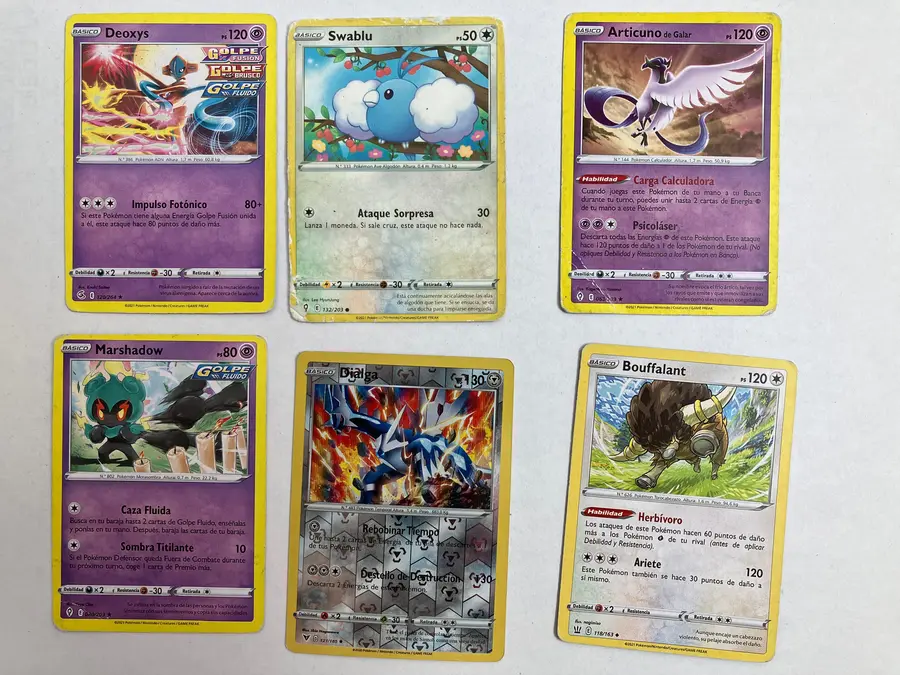
1. Read the name and complete number
Record what is printed without correcting it by intuition. Keep prefixes and denominator when printed. If the crop does not show the number clearly, return to the original or add a clearer photo. The name alone may correspond to many cards.
2. Check the set reference and language
Compare the visible set symbol, code or information with a verifiable source. Language is checked from the card's text, not the interface language. If the source is unavailable or the symbol is unreadable, keep set pending.
3. Separate finish from variant
Finish describes a characteristic that may need another angle to inspect. A variant may require checking a stamp, promotion or another verifiable difference. Do not use isolated glare as proof of holo or reverse, or assume that no visible stamp means a confirmed variant.
4. Keep uncertainty beside the result
A record can have a readable name and number while finish and condition remain pending. That status is more useful than filling every field with false certainty. Rarity, grading or authenticity must not be inferred from a suggested name; they need their own evidence.
5. Review what you are about to save
Check reference, quantity and the linked photo. The demo lets you explore a suggested record and a pending one without writing to a private collection. The predetermined demo illustrates review; it does not measure real recognition accuracy.
Practical questions
Does a suggested identity confirm that the card is authentic?
No. Finding a possible reference and verifying authenticity are different tasks. StackVal does not certify authenticity.
Which fields should remain pending?
Any detail you cannot verify from the photograph, the card or a valid source. Keep what is readable and identify the specific attribute that still needs review.
Local recognition is being validated. The demo is predetermined; it saves no cards and uses no quota. Review attributes against the physical card: condition and authenticity are not certified.